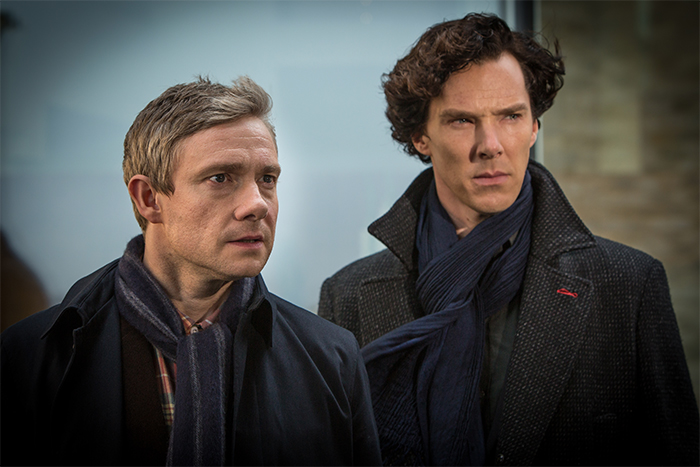
I am dismissive of the virtuous, unaware of the beautiful, and uncomprehending in the face of the happy. So if I didn’t understand I was being asked to be best man, it is because I never expected to be anybody’s best friend…and certainly not the best friend of the bravest and kindest and wisest human being I have ever had the good fortune of knowing.
With that, the viewer realizes that the world’s greatest and most socially awkward consulting detective is not quite the same man he was when we met him in “A Study in Pink,” the first episode of the hit BBC show Sherlock. And if you’re like me, it’s also the moment in which you realize 1) You actually love Sherlock Holmes, vastly intelligent idiot that he is, and 2) You see John Watson as nothing less than the real hero of the story.

Before I go any further, let me confess that I haven’t seen Season 4 yet! But Christmas is a-coming, soooooo…hint-hint, Mom. Also, this is hardly the first time I’ve watched the other seasons: they’ve been in my personal library for years. But thanks to Emily over at The Altogether Unexpected and a renewed appreciation for Benedict Cumberbatch (I blame Doctor Strange entirely), I figured it was high time I gave Sherlock another whirl.
May I just say, it was an incredibly good decision. This show is brilliant. The writing is so clever, the acting is superb, and most of the mysteries are highly enjoyable capers worthy of Sir Arthur Conan Doyle’s original stories. I love the London aesthetic, too: that distinct mix of rain, grit, history, modernity, and proud British elegance.

Sometimes Sherlock can get pretty dark. James Moriarty still gives me the creeps, and I’ll never forget the dull, sinking feeling I had when I first saw Sherlock go into full-blown Jack Reacher Mode in “His Last Vow.” But there’s something else–or rather, someone else–I’ve noticed on this re-watch: someone whose goodness and common sense make this a worthwhile show.
That person is John Watson.
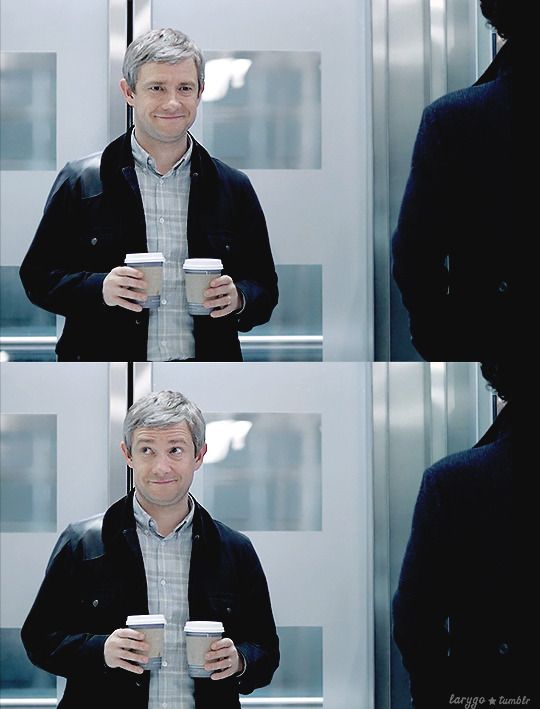
Sherlock describes John as “the doctor who never came home from the war.” This reminds me one of the most beautiful lines in Doctor Who (unsurprising, since Steven Moffat wrote them both): “Demons run when a good man goes to war.” John, a veteran of the War on Terror, is definitely a good man. He’s considerate, self-disciplined, kindhearted, and blessed with a healthy dose of prudence and discretion. More importantly, he has a strong moral compass. Right is right and wrong is wrong with John. You can depend on him to stand on principle even if no one else will.
Sherlock is the exact opposite…at least at first. He has no tact whatsoever; he’s manipulative and demanding; he’s manic and obsessive. If he shows any kindness or tenderness to anybody, it’s probably going to be his elderly landlady, Mrs. Hudson– and even she’s on the receiving end of his sharp tongue at some point or another.
No one really dares to stand up to Sherlock until John enters the picture. He just isn’t afraid of this high-functioning sociopath. Sherlock may be outrageously intelligent (and quite aware of it), but John certainly doesn’t mind telling him he’s a jerk. He doesn’t even mind walking out of 221B Baker Street when Sherlock gets too argumentative or cold, thus communicating to the stunned detective that the world doesn’t actually revolve around him. (Shocker!!!)
But John doesn’t just set boundaries: he also looks after his bizarre and brilliant flatmate. He not only helps him with his cases–especially when they involve emotional elements Sherlock simply can’t comprehend–but he tries to make sure Sherlock takes care of himself. (I even read that Benedict Cumberbatch gained weight for Season 2 in order show how living with John improved Sherlock’s physical and mental state.)

Defending, protecting, and comforting are second nature to John Watson. This is why he’s so gentle with Mrs. Hudson, why he falls in love with the desperate Mary Morstan, and why he consistently directs (or shoves) Sherlock towards what’s right, honorable, and kind. Ultimately, though, it’s why he stays with Sherlock. John knows his prickly friend needs protecting as much as the next person–and that even Sherlock needs someone to believe in him.
His loyalty doesn’t go unnoticed. When we first meet Sherlock, he probably would’ve rather died than open up to a friend. That would be sentiment–and that is “a chemical defect found in the losing side.” But by Season 3, he’s changed his tune quite a bit. He’s actually prone to genuine smiles and laughter. He falls all over himself trying to please (and protect) Mary Morstan, is so much gentler with Molly Hooper, and clumsily but meaningfully expresses his respect and affection for John. He even survives a gunshot wound by sheer willpower just so he can keep John and Mary safe, then risks everything to preserve their future together.
I would argue that this is all a result of the hardheaded but unfailing kindness of John Watson.
“Heroes don’t exist, and if they did, I certainly wouldn’t be one of them,” the detective bitterly informs the doctor in “The Great Game,” the final episode of Season 1. But in “His Last Vow,” the conclusion of Season 3, Sherlock has this very interesting conversation with his brother Mycroft:
Mycroft: “[Charles Augustus Magnussen] is a necessary evil, not a dragon for you to slay.”
Sherlock: “A dragonslayer? Is that what you think of me?”
Mycroft: “No…It’s what you think of yourself.”
Sherlock really doesn’t argue with this…and within minutes, he does slay his dragon. I can’t approve of his methods, but I can certainly acknowledge that he took those risks only because of a friendship that had changed him from the inside out.

“I am dismissive of the virtuous, unaware of the beautiful, and uncomprehending in the face of the happy,” Sherlock confesses at John and Mary’s wedding in “The Sign of Three.” But if his slow but sure character development over the course of the first 9 episodes tells me anything, it’s that even the most difficult people can be changed by the gentle touch of the good, the true, and the beautiful.


 Maribeth Barber Albritton
Leave a comment