Disclosure: This post contains Amazon Affiliate Links, meaning I receive a small commission if you make any purchase through links marked clearly with an asterisk, at no cost to you. Please read my full disclosure for more info.
If April 2020 had gone the way we’d planned, I would’ve had two whole trips–one of them solo–under my belt already. But alas, the Virus That Shall Not Be Named had other ideas, which meant I had a choice: either I could allow April to remain a dull, dreary blank and feel sorry for myself…or I could take advantage of the long stretches of eraser-smudged days on my calendar.
I’m quite happy to say that while my disappointment remained real, I accomplished a lot in April. One of those accomplishments? My second Camp NaNoWriMo win in a row! Another even more significant accomplishment? Finally starting a viable, exciting new science fiction/fantasy novel about which I am incredibly passionate.
I know I mentioned either here or on Twitter (I can’t remember which now) that I was considering a contemporary novel instead. I had an idea–a very cute one, I might add–and I’m not saying it’s something I’ll never revisit.
But “The Cupcake Story,” as I called it, just wasn’t resonating with me. It didn’t get me up in the wee hours of a Saturday morning like my Star Wars fanfiction had…and certainly not like Operation Lionhearted did.
So I embarked upon Camp NaNoWriMo with 5 very specific goals in mind:
1. To jumpstart a new novel, implementing the biggest thing I learned from 3 months of writing Star Wars fanfiction: that sci-fi/fantasy IS my one true love when it comes to writing.
2. To shed self-belittling thoughts and doubts about the legitimacy of such stories as opposed to contemporary/historical fiction.
3. To write a combined 20,000 words of rough sketches and opening chapters.
4. To have outrageous levels of fun in April, which should’ve been a month full of travel but which will now be a month of figuring out which story I want to write.
5. To write the kind of sci-fi/fantasy novel I’d want to read.
For those who don’t know, Camp NaNoWriMo (“National Novel Writing Month”) is a more relaxed version of November’s NaNoWriMo, an annual challenge to write 50,000 words of a new novel. With Camp, however, you can set whatever goal you want, for whatever project you please. Wanna write 10,000 words of novel prep? 25,000 words of fanfic? 50,000 words of screenplay? They got you, fam.
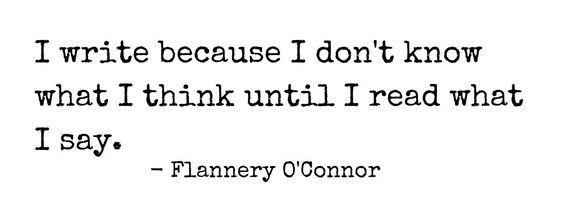
I chose 20,000 words of novel prep: outlines, character sketches, brainstorming, and opening chapters. The first couple of weeks were difficult. My Inner Editor didn’t like being told to go home, and I kept vacillating between two very different ideas–both of which were inspired by abandoned stories of mine from years ago.
Finally, however–on April 15, no less!–I knew exactly which one I preferred. And guess what?
I’VE BEEN WRITING IT. WITHOUT SELF-CONSCIOUSNESS. And it’s been SO much fun.
So here are 5 things I’ve learned from this Camp NaNoWriMo experience…
1. It’s okay if I don’t enjoy writing contemporary/historical fiction.
Wendell Berry’s Hannah Coulter and Katherine Reay’s Dear Mr. Knightley are two of my favorite novels of all time, but guys…I just don’t enjoy writing that kind of fiction. I’ve beaten myself up about that, fearing that my own sci-fi/fantasy (SFF) stories will never be taken seriously. And if I want to be taken seriously, I should be writing more contemporary/historical stories…right?
Yet when I try writing those, it’s like I’m pounding a fist against a diamond wall. But when I write SFF, I feel more like Eric Lidell in Chariots of Fire: “When I run, I feel [God’s] pleasure.” Maybe there’s a reason for that. Maybe I’m meant to write make-believe. Maybe I should write it with all my heart.
2. I write for my target audience…and nobody else.
As a Christian, I ultimately write for the audience of my Triune God. But in earthly terms, I can’t write for everyone. Not everyone will enjoy my SFF novels, and that’s okay. But I’m also learning how to write for my target audience: late teen/new adult women. Since I have four sisters who are in this age group (three of whom love SFF), I’m training myself to write this new story with them in mind.
Of course, I do hope other demographics will enjoy it! But it does help to have a specific audience in mind.
3. No word is ever wasted. Even the ones that’ll never see the light of day.
One morning I wrote 1,600 words for this new story that I probably won’t use. It was background stuff–a boring scene that took place right before the actual opening lines. Once upon a time I would’ve castigated myself for spending a whole morning on something so superfluous. But it helped me understand my heroine and her “normal world”–and because of that, it served a glorious purpose.
4. It’s okay if I do Camp NaNoWriMo my own way…BY MYSELF.
Usually Camp NaNoWriMo is a virtual community event, and that’s wonderful. This year, however, I needed it to be more like a silent retreat. I needed to shut myself up in my own private cabin and hammer things out, change my mind, delete stuff, and type-shout in all caps without worrying about what anyone thought of me or my progress.
That sounds awfully isolationist, I know–and as I learn more about “the centric genius” I would not recommend it long term! But for just four short weeks, I needed the freedom to figure out this story in peace and in silence. The results have been well worth the brief withdrawal into my own head.
5. The words flow when I give myself “emotional permission” to write imperfectly.
This month I’ve been reading Julia Cameron’s The Right to Write
In her fifth chapter, “Track,” Cameron writes:
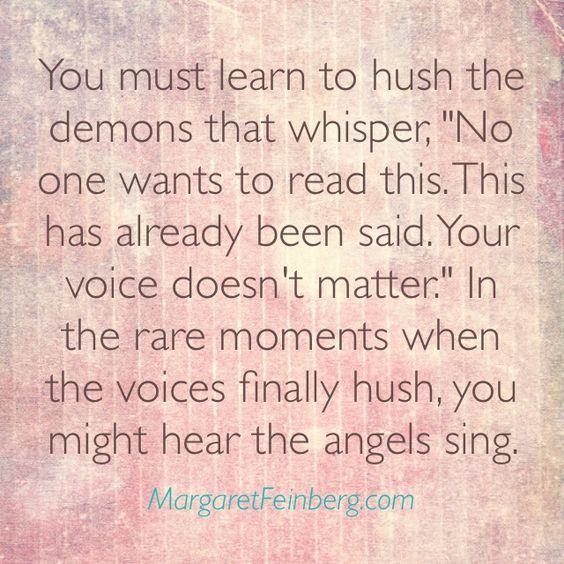
I remembered that once upon a time, writing had been fun for me. My job was to do the writing, not judge the writing. I discovered that the writing seemed to contain an inner plan of its own…I follow it and lay it down. I can pare it, shape it, polish it later. For the moment, my job is just to get it down, just to catch the thought, which I can add to or embellish later on.”
So that’s what I’m doing: following the inner plan, trying not to over-polish. It only confirms something else I’ve learned this month: contrary to what I always assumed, I’m not a plotter. Nor am I a “pantser”–someone who writes by the seat of their pants. But I am a “plantser”: I have a good idea of where this story is going, but there’s nothing like letting it surprise me along the way.
Does that mean I’ll have plot holes to fix in the second draft? Eh, possibly. Does it mean I’ll have to go back and delete unneeded scenes and characters? Most probably.
But I’m writing a first draft, for Pete’s sake. It doesn’t have to be perfect.
And there’s nothing better than simply delighting in my work again.


 Maribeth Barber Albritton
Leave a reply to Amelie Cancel reply