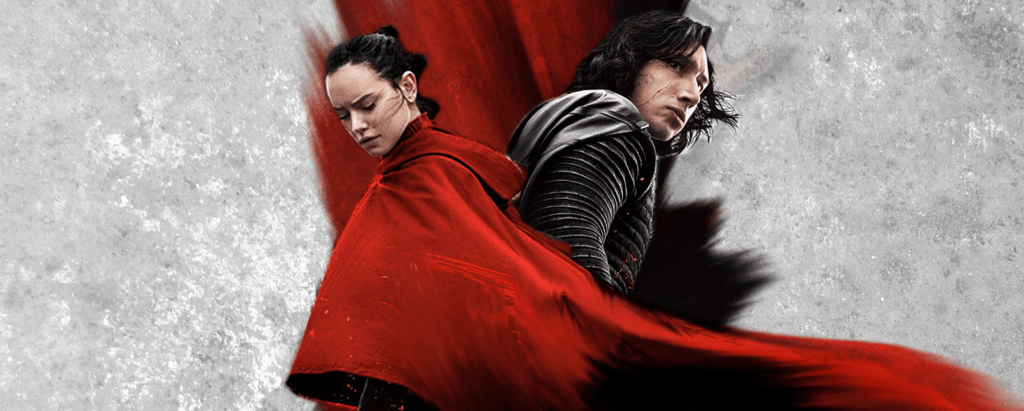
If you told me five years ago that the one fictional romantic pairing I couldn’t tolerate would become one of my favorites, and that I’d be writing scholarly articles on how they actually follow one of my favorite storytelling themes…I would’ve laughed in your face.
Yet here I am. The year is 2020, this my second post for the Everything Star Wars Blogathon, and I’m welcoming you to my little corner of the Internet for an in-depth discussion about how Reylo–the romantic pairing of Rey Skywalker and Ben Solo (formerly known as Kylo Ren)–follows the time-honored motif known as “The Search for the Lost Husband”…but doesn’t follow the one known as “Death and the Maiden.”

First, one distinction and one clarification (because I am all about distinctions and clarifications):
- I do not want Rey to be with Kylo Ren. I want Rey to be with Ben Solo. There is a difference.
- Just because you enjoy a fictional romance DOES NOT NECESSARILY MEAN you yourself want to live out that particular story in your own love life.
Number One is more critical to my point, but I figured I’d better mention Number Two before someone accuses me of wanting my own version of Rey Skywalker’s…ahem…tumultuous love life.

Long ago and far away, I hated the very idea of “Reylo.” Rey became one of my favorite heroines of all time as soon as I met her in The Force Awakens. I couldn’t bear the idea of her ending up with anyone who didn’t deserve her, and in my fiercely-protective, motherly opinion, Kylo Ren was as far from deserving “my Cupcake Princess” as he possibly could be.
But then I saw The Rise of Skywalker, and my mindset changed…to a certain extent. I still did not want my beloved Rey to end up with the Supreme Leader. What I did want–desperately–was for her to finally be with the man she always believed he could be: the hero he finally became in the end.
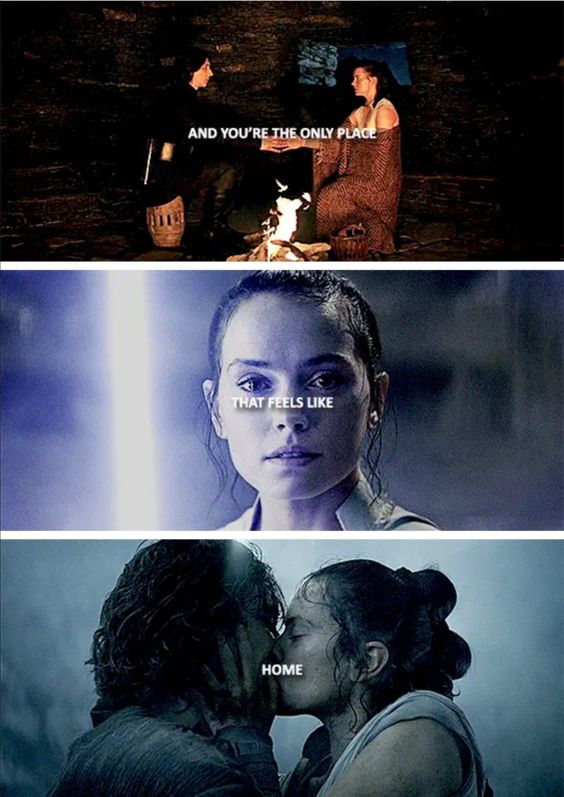
After delving into the mythological and literary influences behind Star Wars this year, I’ve realized it was only a matter of time before I fell for Rey and Ben. For one thing, I’ve always had an OTP type: “Tragic, Haunted Dude + Kind, Headstrong Girl.” Rey and Ben fit in quite nicely with the likes of Victoria and Melbourne, Beren and Luthien, the Doctor and Clara, and Clark Kent and Lois Lane.
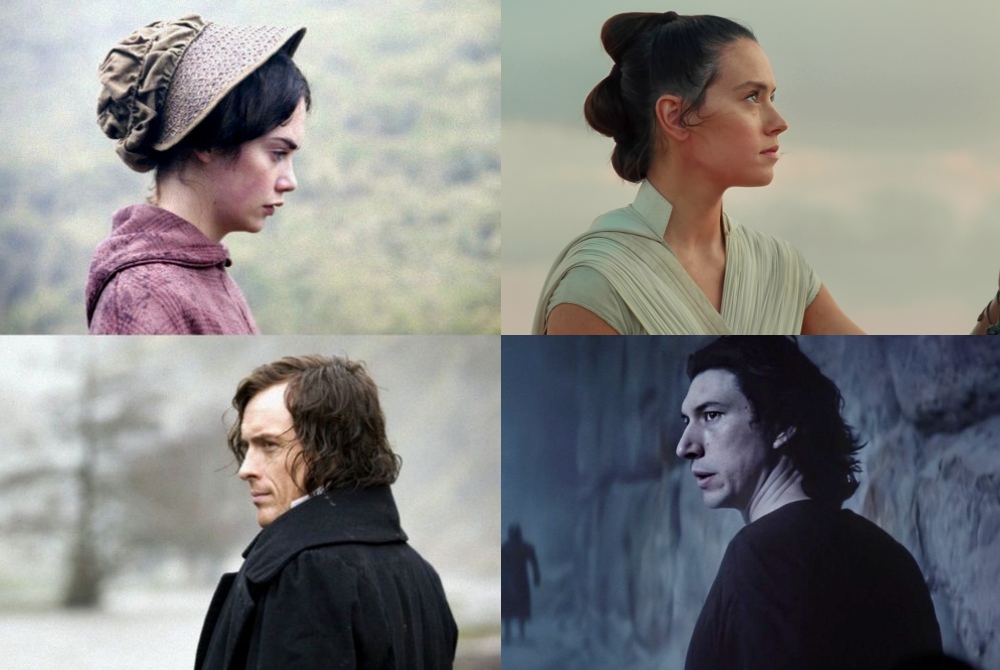
But their story also mirrors three other favorite romances of mine: Belle and the Beast, Jane Eyre and Mr. Rochester, and Eros and Psyche. In their own ways, these stories all carry the redemptive themes of “The Search for the Lost Husband.”
According to the Aarne-Thompson-Uther Tale Type Index–a vast catalogue of the different types (and sub-types) of fairytales–“The Search for the Lost Husband” motif includes these elements, among others (which are just as fascinating for our purposes today):
- a man trapped under a villain/villainess’ beastly enchantment
- a compassionate heroine who falls in love with him (and may even marry him)
- her quest to find and/or rescue her lover/husband
- a happy ending where the heroine finally breaks the enchantment trapping her one true love
You can see lots of Beauty and the Beast parallels here, though the ancient myth of Eros and Psyche is most likely the source for all later variations. Jane Eyre is another great example. Even if Charlotte Brontë didn’t set out with this particular motif in mind, her revolutionary masterpiece features a principled heroine, a disillusioned (“beastly”) anti-hero, a reunion after a tragic but morally necessary separation, and a happy ending full of repentance and renewal.
But notice that in Beauty and the Beast, Jane Eyre and even Eros and Psyche, the happy ending really only comes once the “beasts” change of their own free will. The Beast selflessly allows Belle to leave his castle. Mr. Rochester repents of his dissolute ways long before Jane returns to him. Even Eros defies his mother Aphrodite, possibly for the first time, and rushes to save his beloved Psyche.
Belle, Jane, and Psyche have a profound effect on their men; they “loosen” the enchantments and show them a way out. But the Beast, Rochester, and Eros have to take that final, irrevocable step themselves. They must forsake their own selfishness and spite before they can ever be completely free.

One can argue Ben Solo is “under a beastly enchantment” for most of his story. This does not excuse him from any responsibility whatsoever. I would never argue that. But we do know Palpatine targeted him from the time he was in his mother’s womb; he was tempted and tormented until he finally gave in to the Darkness of his own free will. Yet goodness and light never stop chasing him, hence his constant state of feeling trapped and “torn apart.”
Enter Rey, stage right: a beacon of Light if ever there was one, and the first person who sees the conflict in him and actually understands it enough to fight it well. Rey doesn’t just loosen the enchantment: she rattles it. But it doesn’t break away entirely until Ben Solo makes the decision, for himself, to turn away from the Dark and join her in the Light.
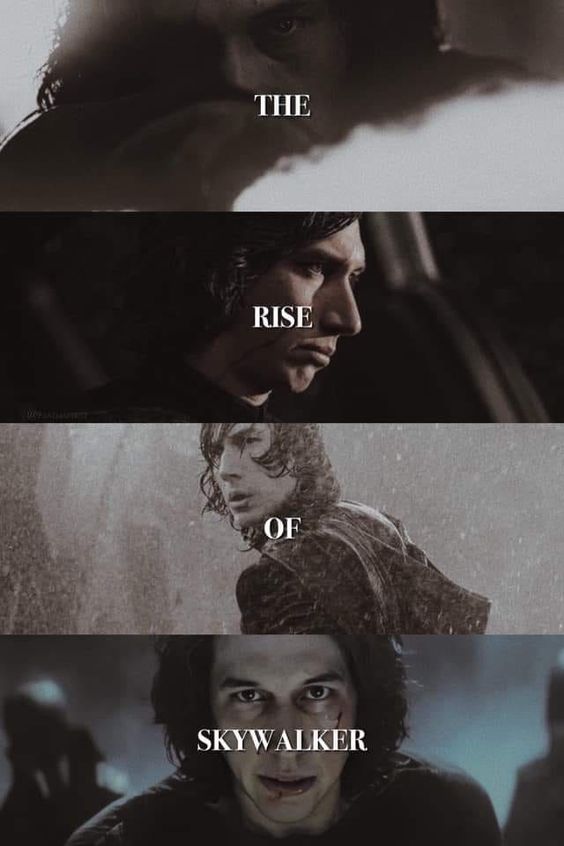
Now let’s look briefly at how this compares with the “Death and the Maiden” motif. This classical trope finds its roots in another ancient myth, that of Hades and Persephone. According to Wikipedia, it primarily features “a young woman being seized by a personification of Death,” and one immensely popular variation of this tale (which I do love) would be The Phantom of the Opera.
Rey and Ben’s story definitely features a few details of this motif. In the ancient myth, Hades kidnaps Persephone and carries her down to the Underworld in his black chariot; in The Phantom of the Opera, the Phantom takes Christine to his underground lair where he tempts her, coaxes, and intimidates her. Similarly, Kylo kidnaps Rey in The Force Awakens, carrying her aboard his black shuttle–while in The Last Jedi, he asks Rey to be his Empress aboard the Supremacy, a massive ship with lots of hellish vibes.

But here’s where “Death and the Maiden” breaks down in the Reylo story. Unlike Persephone or even Christine (until the very last moment), Rey has agency, and she uses it. She fights Kylo Ren every step of the way, yet she fights for Ben. She refuses to give in to the Darkness even when it’s most tempting and consistently appeals to Ben’s conscience. She knows he’s still in there, deep down. As a result of her influence (according to the Rise of Skywalker novelization), even he has to admit that “Rey [is] his light.” She is his true north, leading him home. He is the one who can’t resist her–not the other way around.
Which is why, once again, I believe the Reylo story is ultimately a “Search for the Lost Husband” tale. At the end of the day it’s a story of redemption and restoration, not captivity and temptation.
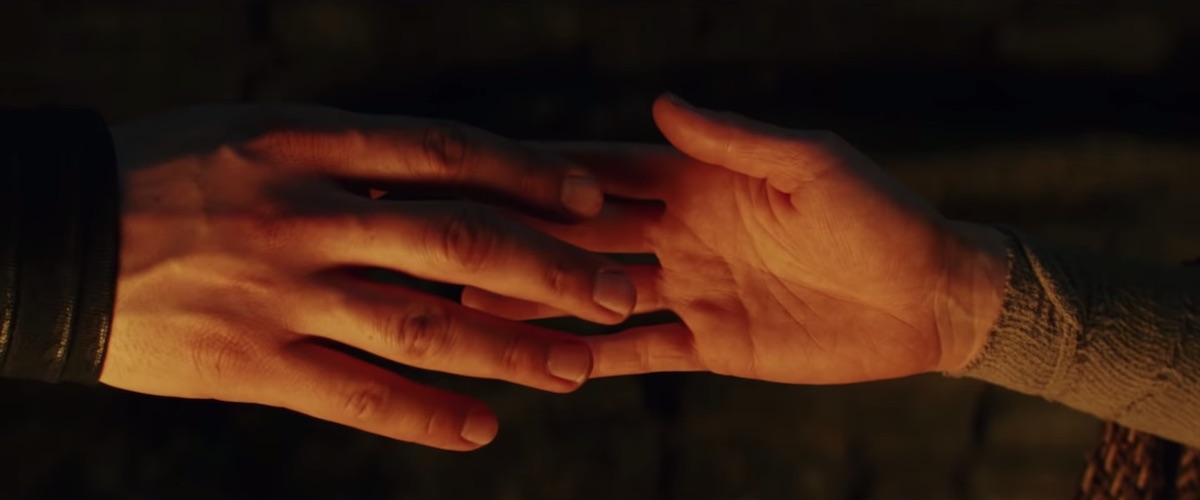
I know this is all a bit controversial, and not everyone sees it the way I do…but WOW, I had a lot of fun writing this! There are many, many podcasts and articles that articulate these things in even greater depth, but getting to explain why I became a Reylo convert (which also explains why I write happily-ever-after AU fanfic, hehehe), and how it tickles so many of my storytelling fancies has been amazing. I’d love to hear your thoughts in the comments!
And once again, Eva-Joy and Katie Hanna, THANK YOU for hosting the Everything Star Wars Blogathon!


 Maribeth Barber Albritton
Leave a comment