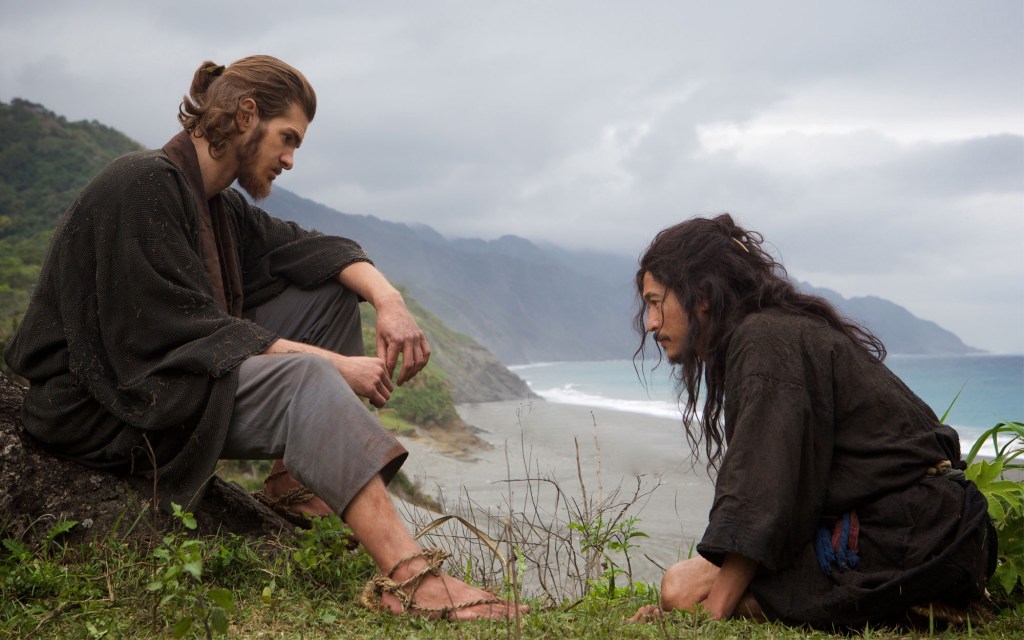
Buckle up, ladies and gents! It’s been a long time since I’ve been this passionate about a story, and I am here to tell you this one is a must-read, must-see.

Back in ye olden days (and by “ye olden days” I mean 2016) when the film Silence came out, a friend of mine told me she’d recently read the book on which it is based. “It’s wonderful,” she said, her passion for this story shining in her eyes. “The movie is so hard to watch, but the book…oh, the book!”
I was intrigued, but didn’t act on it. Silence became, for me, “That movie where Spider-Man (Andrew Garfield) plays a missionary.” Then last year I became, shall we say, an Adam Driver enthusiast, and Silence became “That movie where Spider-Man and Ben Solo are missionaries–therefore I shan’t watch it because I’ve watched those two suffer enough and I don’t like pain.”
But over the past couple of months, new interactions with this story came at an alarming rate. First I saw the film at Barnes & Noble and almost bought it…then remembered I didn’t want to watch My Boys suffer, so I put it away. Barely a week later, during a re-read of Sarah Clarkson’s Book Girl, I stumbled upon her hearty recommendation of the 1966 novel. Mere days after that, my good friend Katie Hanna used the novel as an example of powerful, thoroughly Christian art in her excellent article “The Other Kind of Christian Fiction”—AND THEN, while I was reading Philip Yancey’s The Jesus I Never Knew, HE referenced the author of Silence, Shusaku Endo!
I stopped right there and prayed, “Lord, do you want me to read this book?!” My small local library didn’t have it on hand but I went ahead and reserved it, figuring it would get to me from the main library within a week or so. It arrived THE VERY NEXT DAY, guys.
I inhaled that novel. I even put aside my sentimental anxieties and watched the film. And I am here to say that Silence is not only one of the most thought-provoking stories I’ve ever read or watched, but one of the finest, most honest pieces of Christian fiction I’ve ever encountered.
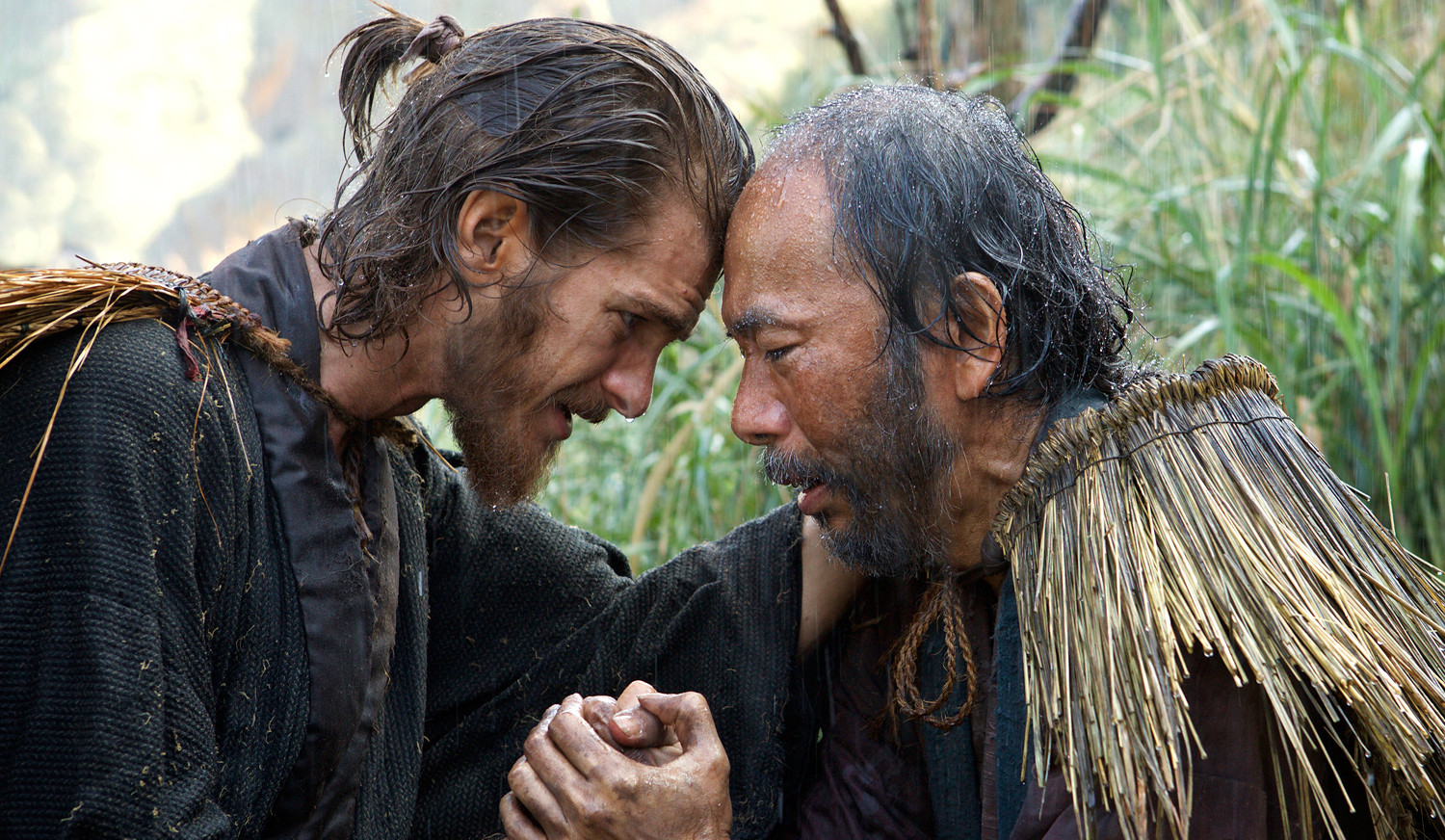
Silence is the tale of a young Jesuit priest, Rodrigues (played by Andrew Garfield in the film), and his companion Garupe (Adam Driver), who journey to Japan together to seek out their old mentor. Rumors say that Father Ferreira (Liam Neeson) has denied the faith, but this is unthinkable to Rodrigues and Garupe. They are determined to not only rescue their mentor, but to set the record straight and defend the reputation of the Church in Japan.
Seventeenth-century Japan, however, is a place of indescribable cruelty. Japanese Christians (predominantly Catholic) are mercilessly persecuted, and any foreign influence is looked upon with disgust and hatred by the ruling shogunate. Yet as Rodrigues and Garupe discover, the Japanese Christians cling to their childlike faith despite their sufferings and the fact that they’re often forced to trample on the fumie–a bronze image of the crucified Christ. This is considered an act of apostasy; indeed, Rodrigues and Garupe both recoil at the thought of dishonoring Christ in such a way. (If that strikes my Protestant readers as odd, consider how you might feel if someone ordered you to trample or spit on a Bible. Would you do it?)
But what the priests soon realize is that if their new friends don’t step on the fumie, whole villages will be massacred. Furthermore, if they, the priests, are captured and make their own refusal, the samurai will leave them alive…but they’ll torture the Japanese Christians and force the priests to watch.

What do you do when it’s no longer a question of dying for your faith, but listening to the screams of others being forced to die for your faith? As terrifying as that question is, this one is even worse: what do you do when God seems to be silent in the midst of such physical and emotional agony?
Silence doesn’t provide neat, triumphant answers to these questions. This is not Facing the Giants, where you get the football championship, a brand new truck, and a positive pregnancy test if you simply have enough faith. This is, instead, the story of people who ask and say things like:
“My love for God is strong. Could that be the same as faith?”
“What have I done for Christ? What am I doing for Christ? What will I do for Christ?”
“I feel so tempted to despair. I am afraid. The weight of Your silence is terrible.”
“But do you still believe?!”
“My struggle was with Christianity in my own heart.”
These Christians engage in raw, desperate prayer and doubt, wonder afterward if their despair and pain are somehow blasphemous…and then hurl themselves right back at the feet of Jesus where they know they belong.
This, to me, is far more relatable and realistic than the extravagant rewards and tidy conclusions of most modern Christian fiction. I feel the same way about Rodrigues’ growing awareness that he needs Christ just as much as his Japanese friends do. Initially, Rodrigues has a bit of superiority complex towards them. They’re filthy, uneducated, and not at all theologically astute. He especially despises the drunkard Kichijiro, who repeatedly capitulates to the authorities out of sheer terror. But when Rodrigues finds himself bearing the same exact shame and pain that torment Kichijiro, their shared need for Christ’s forgiveness drives him to his knees.

Yet all is not lost. After the story’s emotionally exhausting climax, Rodrigues is a weary shell of the man he once was. But while the authorities are certain they’ve destroyed his faith, he maintains his deep personal relationship with Christ. If anything, he loves Jesus in a deeper, more profound way than he ever did before. Could it be because he now recognizes just how much he needs his Savior? His inner dialogue–clearer in the novel than in the film–emphatically confirms this.
“Lord, I resented your silence,” Rodrigues prays–and Christ answers him gently, “I was not silent. I suffered beside you.” In the end, Rodrigues is finally able to say with absolute certainty, “Our Lord was not silent. Even if He had been silent, my life until this day would have spoken of Him.”
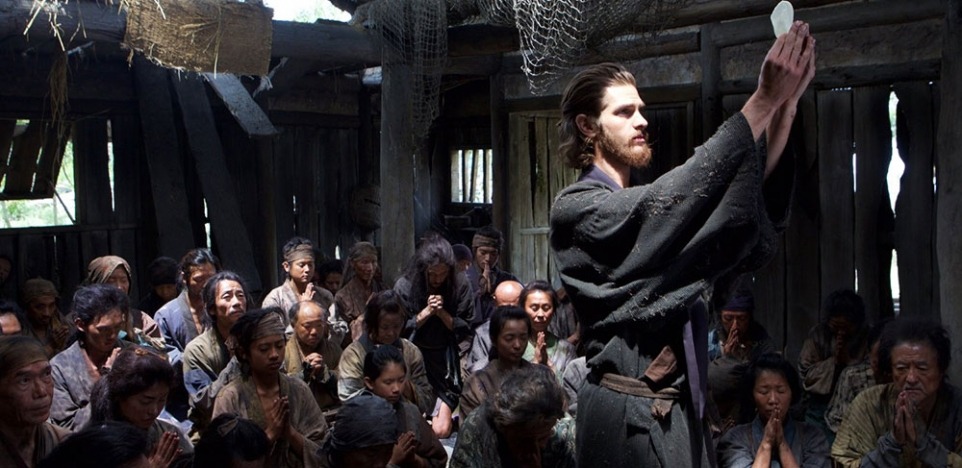
Silence is an intense psychological drama and not for the faint of heart. Evangelical sensibilities will likely chafe at the Catholic overtones, and many have accused it of promoting compromise in times of persecution (an accusation I strongly disagree with, but we can discuss that in the comments if anyone is interested!). Those debates aside, I maintain that Silence is far more honest about the realities of the Christian walk than the Prosperity Gospel-laced tales that pass for Christian fiction these days. Both the book and the film are beautifully crafted; even the film, while rated R, is never gratuitous in its fidelity to the novel or to the history it portrays.
Silence challenged and encouraged me, forcing me to reckon with my own ideals, my relationship with Jesus in painful times, and the way I love those who’ve hurt me. That is what good art is supposed to do, and that is why I cannot recommend it highly enough.


 Maribeth Barber Albritton
Leave a reply to The Mid-Year Book Freak-Out Tag – A Writer's Tale Cancel reply